Monday, August 25, 2008

Anniversary - BBQ - Dine in Style

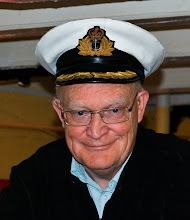
Sunday 24th August see the 40th wedding anniversary of Irene and myself. We started the day calmly with tea (ginger drink) in bed. Cards were exchanged. Irene now has a ruby (a small one). Would you believe that a morning on the allotment followed. Then the rush to preserve the pickings accompanied by a phone call from Jan to find out were we where.

We did get to the Dales for our church BBQ. Would you credit the rain? The sun came out and we crept out of the shelter.


Bob did a great job on the barbie.


It was a pity that we had to leave, but we had two hours to get home, do jobs and return to nearby Jan and Lawrence's.

While at home Jenny and Francis called in with a card and present. It was a great present for allotment holders with a greenhouse; an automatic window open and closer. It will be better than the old bent wire we currently use.

Back to Jan and Lawrence. They were taking us to Morley Hayes (posh golf club) for a meal (no expense spared). Lawrence was keen that I dressed smartly. I did and so did Irene. It was a great meal in a great atmosphere.

Friday, August 22, 2008

Barbeque

We will be meeting at Bob and Julie's on Sunday around 12:30 for a 1:00 start.
All will provide a meat portion.
Jim and Irene will supply salad
Lawrence and Jan - pudding
Bob and Julie - drinks and other bits.

Pray for a warm, dry day.

Saturday, August 16, 2008

Towards a Meetingless Church

I read the following with a new level of understanding.
Those who believed what Peter had said were baptised and added to the church --- about three thousand in all. They joined with other believers and devoted themselves to the apostles' teaching and fellowship, sharing in the Lord's Supper and in prayer.
A deep sense of awe came over them all, and the apostles performed miraculous sugns and wonders. And all the believers met together constantly and shared everything they had. ... They worshipped together at the Temple each day, met in homes for the Lord's Supper, and shared their meals with great joy and generosity --- all the while praising God and enjoying the good will of all the people.
Acts 2 : 41-47 (NLT)
We have all read these words many times and they are something of a mantra for church life. These people who had joined the church were pioneers. They had experienced nothing like it before. By Spiritual revelation the amazing truth about Jesus had sunk in. They seemed to be walking about in a daze, unable to do anything other than gawp, learn more, talk more, praise more. They did not want to to separate themselves from other believers for anything other than sleep. Even food was a shared experience.
I have attended at least one meeting which had this Spirit upon it. It only ended by the pastor's wise words, "go home." We could have danced all night.
I have attended many 'ordinary' Christian meetings where believers have lingered for longer than I would have liked.
It is not what the people in 'Acts' did that impresses me so much as the intensity with which they did it.
I can understand the present difficulties with 'meeting-based' Christianity. A Christian meeting is often just another activity in a very busy week. I am not saying that people attend just out of a sense of duty, but that meetings are time bound. There is (and in today's economy) has to be an agreed moment in the week. There also has to be 'starts' and 'ends' to these periods. Everything has to be done within these markers and the quality of the meeting is judged by what happens during these time intervals. A good, organised performance suites most people.
The 'Free Dictionary' says that 'constant stresses steadiness or persistence and unvarying nature'. This does not help us to understand how often the first Christians met, how long they met for or when they met. But it does convey an urgency to share with other believers as frequently as possible. Neither do we know how often they met for the Lord's Supper or when they met. We do know that they met daily for worship. We do not know the numbers involved. Did all meet at the same time? Did the composition of the groups vary according to other commitments?
It could be argued that this stage in the development of Christianity was uniquely for that time. This was the very beginning of an exciting world wide movement and demanded a high level of attention. The death and resurrection of Jesus was fresh in peoples' minds. The gospel message was very understandable to the Judaic mind. Life style made possible such an intensity of meeting.
However, we do know that Christian meetings developed in the New Testament period and began to move into gentile territory. I am also convinced that Christians continued to meet with same degree of freedom and urgency in the first three centuries. We also know that meetings, in various forms have continued to happen to the present day.
Does this mean that in our more individualistic, materialistic, high tech society we should expect meeting-based Christianity to continue to take place in any form?

Next Meeting

We will meet at Lawrence and Jan's on Sunday 17th 2008 at 10:30 am
Please email for details.

Thursday, August 14, 2008

Towards a Theology of Church

I used to think that in order to work out a theology of church all that you needed to do was to check out books like ‘Systematic Theology – An Introduction to Biblical Doctrine’ by Wayne Grudem (1994 – ISBN 0-85110-652-8). To me this was the Biblically sound way forward. If what was written in the book squared up with what was in the Bible then you were on safe ground.
A quick survey of the large variety of church expressions would show that there are difficulties with this simple position. That is not to say that the Bible does not hold the complete revelation about the nature of church, but that what it says needs to be viewed the light of history and practice.
The current position of my exploration of church is that the church is the gracious gift of God for the nurture and equipping of the saints to enable them to love God and human kind. All that I can conclude at this point is that provided the organisation seeks these goals it is on the right track.
God has created each individual in a unique way such that different people feel comfortable in different settings. The people that are part of Pioneers church, or are associated with us may or may not feel at home in other settings, but feel most comfortable to adopt this church style. A similar comment can be made for people who are comfortable as part of other churches.
I am very sure that ‘the church is the community of all true believers for all time’. (Grudem page 853) This raises the whole debate concerning the issue of the ‘visible’ and the ‘invisible’ church. I take this to mean that it cannot be known, at this moment in history, which people in any church or indeed, out of any church group, are true believers and which are not. I illustrate ‘at this moment in history’ by referring to the novel ‘Left Behind’, in which large-scale disappearance of many people have taken place. Most of those who have disappeared are known to be ‘Christians’ and, surprisingly, some known to ‘Christian’ ministers, have not been ‘raptured’ into heaven.
For me the theological and practical problem seems to involve answering the question, “How does community work out?”
The Bible seems to show that believers generally met in small groups (although there is evidence of larger groups). From the time of the dispersion these meetings took place in the homes of believers in their own area. They met for worship including breaking bread, teaching and supporting one another. It would seem that unbelievers could come as visitors, but generally avoided joining a group of believers unless they first enquired.
The first and second century church seemed to hold to these same principles. But, if anything membership became even stricter. I understand that there was a ‘bouncer’ on the door. True ‘enquirers’ had a certain level of admission short of communion. It became the practice for ‘enquirers’ to be ‘discipled’, generally by the sponsor who had introduced them to the faith in the first place. I understand that ‘lifestyle’ evangelism was the principle method of demonstrating the faith to unbelievers.
My understanding of these changes was that the church began to form in pockets within an ‘alien’ culture. Apart from not have a Judaeistic, monotheistic faith the pagan nations did not have the same societal or moral values. Hence the bouncer to ‘protect the flock’ and the ‘training’ before admission.
Water baptism was still the norm before admission into membership, although, I believe that, at least one of the early church fathers was calling this into practice.
The most significant changes that took place were in the fourth century when the Roman Empire was ‘Christianised’. It was ‘at this point there was a need to develop structures for maintaining a large semi-civic organisation’. (Rev. Tim Norwood – ‘Joining the Rainbow’ – 2008 – unpublished). This led to the formation of a ‘professional’ priesthood and the building of ‘churches’. The payment of tithe began at this time as an ecclesiastical tax; replacing the ‘table’ for helping the needy.
At this point I find myself in an awkward position. If, as I do, accept the changes brought about by planting Christianity into an alien culture, then, I should accept that all historical changes to the church are perfectly valid. To some extent I do; as pointed out earlier. That is the church is inclusive. However, I think that the church has lost much when it was ‘professionalised’. It would seem to me that much of the personal responsibilities of believers can easily be eroded, and non-believers could easily consider themselves believers as long as they follow the rituals of church.
Over the years I have witnessed many church leaders of various denominations trying to address these issues and I think that the results could easily lead to distorted ‘believers’ in a distorted church.
The questions for me are these. Firstly, is it possible to recover the spirituality of the early church given the structures that we have? And, secondly are some structures more open to what seems to be such a mega shift.
My feeling is that answers to such question of crucial importance if the church is going to impact the prevailing post-Christian world view.

Thursday, August 7, 2008

My Personal Spiritual Journey

In writing this piece I am influenced by the writings of Alan Jamieson in his book ‘A Churchless Faith’. He uses the analogy of being on an ocean liner to represent being part of main stream church. I am questioning myself as to whether I have truly been part of mainstream church at any part in my life.
I was born immediately after the Second World War ended in the year 1946. I understand that much questioning was taking place as to the presence of God at such an awful time, and, of course, the role of the church. There was also the questioning of the communist ideology in the West with a mixture of fear (The Cold War) and perhaps the feeling that communal ideas could be the salvation of mankind.
I believe that my father, who did not go to war because he worked on the land, was very reflective about what was happening. He had some leaning towards communism in what he said and did not experience the real terrors of war which led many soldiers to appreciate divine intervention. He undoubtedly had a form of faith in God, but I believe that he had lost faith with the church. I was therefore brought into the world through the traditional root of baptism into the Church of England and handed over to my godparents to introduce me to the life of the church. For many years aunty and uncle religiously took me to the local Anglican Church. I have memories of the building as I sat there with my younger brother. Eventually, however, my uncle became disillusioned with the church, or at least the minister, and that ended the first phase of my church life.
I believe that this first phase was merely an experience, rather than membership.
When we became more independent, my brother and I felt that we needed to renew our church attendance. To this end we went off on our own to visit other churches in the town. We lingered in some longer than others. I was much impressed by the Pilgrim’s Progress story which was the central teaching in one church for a number of weeks. This phase came to an end.
During this phase I feel that I was a visiting observer of church rather than a member.
School was the next phase of my spiritual journey. Biblical Christianity was taught with great seriousness. I was given my first Bible (A King James) by the local education authority, via the school. Worship, each day, was taken very seriously. It was at this time I learned many of the Ancient and Modern Hymns that still recall today.
If anything, it was during this phase that I greatly experienced and was part of church. I was in a caring community. Many of its leaders (teachers) were Christians and I was nurtured along good moral and spiritual lines. School was my second home. I valued it.
Seven spiritually empty years followed. Work and the world took over. I had serious education to do. My best friend was the son of a vicar. He and I spent many happy hours touring the Mansfield pubs. During Teacher Training I dabbled very briefly in religion for the wrong reasons, but social life was more important, even than training.
However, it was here that I met and married my wife Irene. At the time her work was more important than her faith. In fact it was not until we set out to arrange the wedding that I discovered that she had any sort of faith, and only several years later that she returned even more fully to the God that she had given her life to, many years earlier as a school girl.
I then observed my wife as she trod the Anglican pathway, introducing our two oldest children to it as we moved from home to. That is from Brington, Hunts. To Aylesbury to Great Horwood nr. Milton Keynes. It was in Great Horwood that her journey was to change and greatly influence mine. Here she became disillusioned by Spiritless, dead tradition and began, with her friends to explore alternatives. Our home would become a meeting place for the transition period as she moved over to Pentecostalism. I was still an observer. However, I tasted some of the true Christian Spirit for the first time, as I went about my degree studies, which occupied a lot of time. I do remember saying to my wife at this time that I understood early Christianity to be no more than simple gatherings for a meal and worship in someone’s home. This was at the time when the group was concerned about the validity of taking communion without an ordained minister. In fact they got around it by inviting a local AOG pastor to visit and officiate.
I was to become an atheistic head teacher of a Church of England school. It was here that I am certain that God made a personal revelation to me, sealing my destiny forever. (Very dramatic). I began to attend an Elim Church in neighbouring Stamford. The church became independent shortly after I joined. I became a baptised member of the church and for awhile felt very much at home there. The call of the small group tugged at me. We (my wife and I experimented with ecumenical village groups and attempted to established a main stream AOG church in nearby Oundle. For ‘spiritual’ reasons I lost my job at the school and I thought that the call had come to work at Christian Education in Milton Keynes. This meant joining a very large church in the ‘City’. During this time our two youngest boys were born and our eldest made the transition through university to adult life. At this point I will not speak much of regrets and the forgiveness that I owe all of our children.
Following my ‘failure’ to establish Christian schooling in Milton Keynes and the need to give our youngest boys a ‘proper’ education we moved to Stapleford, Nottingham, where for 11 years I was head of religious studies at ‘The King’s School’, until my heart attacks and retirement. At the beginning of our time here we attended a sister church of the main sponsoring church of the school.
During this phase it may be possible to say that I was fully a member of the main stream church. I had been baptised. This, or communion, is often viewed as the boarding pass. However I was rarely comfortable in any of the churches that I attended.
My conclusion is that I have never truly sailed on any of the church ships that we have boarded. Therefore I do not consider myself ever to have been a church leader in the true sense of the word. My current theological position is that since my baptism in 1984 I have been travelling on the ship of Salvation, the church of Jesus Christ.
When we discovered ‘House Church’ we had not come into port, we had discovered the ocean going liner that would enable us to continue the rest of our salvation journey. We now have to work it through.

Wednesday, August 6, 2008

The Purpose of this Blog and the History of Pioneers Church

My name is Jim Norwood. I am 62 years old.

Purpose

The purpose of this blog is to explore the theology of church as seen in practical experience. This will draw on my experience of 'Church', in particular 'House Church' and on my spiritual journey.

Go in peace, your journey has the Lord's approval.
Judges 18:6

History of Pioneers Church

Pioneers Church Stapleford started about 9 years ago.

Our (Jim and Irene Norwoods') involvement started in January 1999.
Francis Luckcock, our next door neighbour, informed us that friends of his, Martin and Alison Holland had started to meet on Sunday morning in their home in Stapleford. I duely informed the pastor of the church that we were attending that we were going to try being members of the new group and would tell him within the year of our final decision.

The group soon added two more members; Sue and Ruth.

My veiw is that we all thought that the church would develop in the traditional way; a larger group which would then move into a hired building and ultimately to purchase its own building. To this end Martin attached us to Lifelink International; to whom we tithed. We visit a growing group in Stoke on Trent when they met in their home and then when they were moving into their building. We visited other existing Lifelink churches and had visits from leaders, including the senior pastor, Alan Scotland. We also held regular prayer meetings in a room in the nearby college.

Early in 1999 Alison explained why we should be named as Pioneer Church. Accounts were set up and an effort made to gain charitable status.
At about this time Irene brought us a word which we took to be prophetic.
Go in peace, your journey has the Lord's approval.

During the year we took part in various community events; notably 'All Stars Football Coaching'.


Francis as a Panda
However, we were to come across two important books. The first being a small book called 'Custom or Command' by Stan Firth (1996 - ISBN 0-9529621). The second called 'Houses that Change the World' by Wolfgang Simson (1999 - ISBN 1-85078-356). We all read these books and discussed them as a group. Our theology was changing.
Another family that we had known from our previous church were added to us. Very soon after this they formed another group known as 'The Lighthouse Church'. This thrived for a while, but ended when the leader moved to a larger church in the town. Dave had been the leader of the Sunday School team that I was part of in Milton Keynes joined us with his friend for a while. Dave had moved up to nearby Kirkby-in-Ashfield just after us for similar church related reasons. Lawrence and I were working together on Martin's bathroom. He joined us, went speed dating, met Jan. She became a Christian and were married on September 1st 2007.
During these years our work extended through Irene to a group of older people at Leicester House and a neighbouring group of similar people.
About 2 years ago Martin was offered an admininistrative post by the Lifelink church at the Bible College of Wales in Swansea. They (he and Alison) moved to on site accommodation. When they left we also lost Jenny Luckcock who started attending an evangelical church in Nottingham, Ruth who had completed her degree at Nottingham University and returned to Birmingham. We also lost Sue.
This left us with Francis, Lawrence, Jan and ourselves. Francis chose to leave in March of this year.
Just before Francis left he reintroduced us to the Dales. They (Bob and Julie) are unchurched christians who had given us the Stan Firth book that had started the house church phase of our church journey.
Currently our core group consists of Lawrence, Jan, Jim and Irene. Bob, Julie and Sue meet with us from time to time; particularly when we meet in Ilkeston where Jan and Lawrence now live. The work with Leicester House and neighbouring older people continues, as does our relationship with the other 'Forum' churches in the town.
Our bank account is now 'Pioneers Church'. We meet in different homes as appropriate. We look to church planting as a key element of this form of church life. We give regularly to those in need. We no longer give to 'House2House UK' or 'Lifelink International'.